
DOWNHILL BIKING Time Trials and Personal Bests
Read a run, chase a medal, and understand what a record descent looks like.
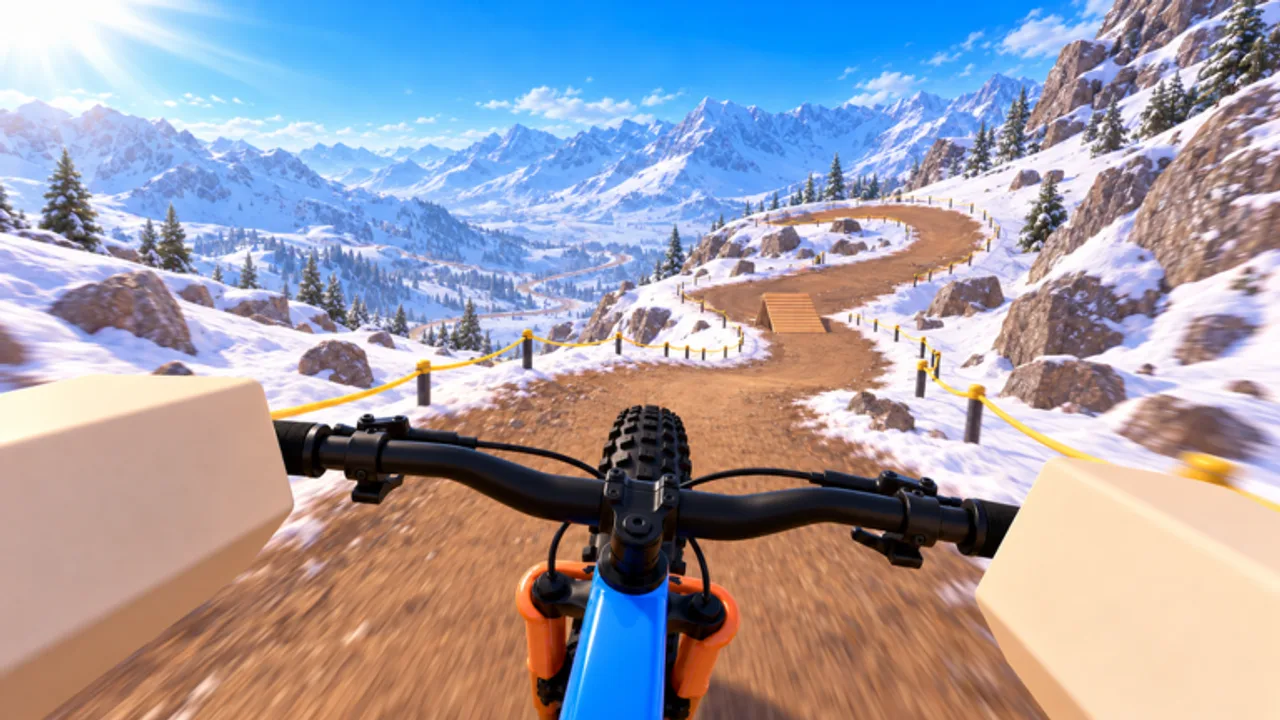
Time trial is the named run format in DOWNHILL BIKING, and the game says so itself. The badge added on 16 November 2026 called First Finish unlocks when you “Finish your first time trial run,” and the official description on the Roblox page promises that you “chase your best time to the bottom.” That is the mode most players live in, and this page explains how it works, how to convert it into medals, and how the fastest lines in the game actually look.
A time trial in this game is a sector run against the clock, not a separate side activity. You drop into a sector, you ride to the bottom, and the game measures the descent. What you do with the clock is up to you: medal hunting rewards consistency, while the record chasing reward rewards a single flawless descent.
How a time trial run is structured
Every descent follows the same shape:
- Spawn at the top of a sector with a bike and a full run ahead of you.
- Ride the face of the mountain, choosing a line through corners, jump lips, rails, and features.
- Finish at the bottom, where the game records your time and awards the medal tier you earned.
- Bank the result, which feeds both your personal best and the medal ladder that unlocks the next sector.
Because a run always starts at the top of a sector, and because a gold medal in that sector is what opens the next stretch of mountain, your best time and your progression are the same number. Chasing one chases the other.
Medals are the time trial scoring system
The sector medal is the visible output of a run. Bronze, silver, and gold map to slower and faster thresholds for the same line, and the gold threshold is the one that matters for progression. Full threshold guidance lives in sectors and gold medals; the short version is that a gold is a clean, repeatable descent, and medals do not get handed out for spectacular crashes.
The badge data supports this. Only about 59 percent of players have ever earned a first gold medal, while essentially everyone who joins has finished a run. Finishing is free; finishing fast enough is the skill.
Reading your own run
You cannot improve a time you cannot see. Even if the game does not show you a split screen, you can build one yourself with a tiny routine:
- Pick one sector and run it five times in a row.
- After each run, write down one thing: the corner where you braked earliest, the jump where you nearly lost the front wheel, or the section where you felt slow.
- Change exactly one thing on the next run.
That single-variable method is the difference between grinding and improving. Changing your brake point, your jump timing, and your line in the same run tells you nothing about which change worked.
If you want the visual version of this method, the record run embedded in this article is worth studying. Notice where the rider carries speed, where the bike is straightened, and where the run gets messy. A good record attempt is not faster in every corner — it is cleaner in the three corners that cost the most.
Chasing a personal best
Personal bests come from repetition, not from heroics. A useful routine:
- Warm up on the sector below. Two easy runs rebuild your line and your hands.
- Run your target sector once at 80 percent. That is a scouting lap: note the features and the traffic.
- Run it once at 95 percent. Commit to the line, skip the optional tricks.
- Run it at full effort. Everything you have learned in three runs, nothing new.
The mistake is jumping straight from warm-up to full effort. That is how people set a personal worst and then wonder why the medal stayed silver.
Where tricks fit into a timed run
Tricks are the interesting part of the game and the worst thing to add while you are still hunting a time. A tailwhip that you cannot land reliably adds two seconds and a wipeout risk to a run that was otherwise clean. The correct order is: clean line first, then one trick that always lands, then style.
Once your gold is comfortable, style becomes free speed in the sense that it stops costing you anything. The tricks guide covers the timing windows, and controls covers the inputs you need to keep the bike straight while you commit to them.
Record attempts are a different discipline
A record run and a gold run want opposite things. A gold run wants the safest version of the fastest line that still works on a busy server. A record run wants the fastest version of the line that exists, executed once, with everything on the line. The player who posts a record usually repeats the same run dozens of times and gets lucky on the final attempt.
If you want to see the ceiling of the game, watch the record video in this article. Then ask yourself the practical question: how many clean attempts can you realistically make in one session? That number, not the record, is your real limit.
Multiplayer changes a time trial
Servers hold up to 20 riders, and every one of them wants the same jump lip you do. On a busy server, a time trial is partly a traffic problem. Practical adjustments:
- Ride on the busier side of the trail where the line is wider, not the exact line of the leader.
- Expect to lose a second to a collision and treat it as part of the run, not a mistake.
- Use empty servers when a record really matters. Join a fresh server and check whether the ridge ahead of you is clear before you commit to the fast line.
- Read the traffic, not the rider. Most collisions happen when two people pick the same line at the same moment.
The players hub and racing tips cover the competitive side in depth, and servers and matchmaking explains how to find a quiet server and why the game has no private servers.
Wipeouts, bones, and the clock
A crash ends the timed portion of your run, but it does not end your session. Wipeouts pay cash for every broken bone, which is exactly what makes a risky attempt rational: the downside is time, and the upside is a medal plus a payout. The wipeout economy guide covers how to farm that cash deliberately when you are between medals.
A practical time trial checklist
- Pick the sector you are one medal away from, not the hardest one on the mountain.
- Warm up on the sector below.
- Draw one line. Brake points, jump timing, landing zones.
- Run it three times with no tricks.
- Add exactly one trick per jump and repeat.
- When you bank the gold, move one sector up and repeat the routine.
Keep a record of your times somewhere, even a notes app. A time trial game is a numbers game the moment you stop treating it as a vibe. And remember that the game also tracks achievements separately from times, so check the badges and achievements guide to see the other half of your progress.
Frequently Asked Questions
Quick answers for DOWNHILL BIKING riders.
What is a time trial in DOWNHILL BIKING?
It is the standard timed sector run: you drop in at the top of a sector and ride to the bottom while the game records your time and awards a medal. The First Finish badge unlocks when you complete your first one.
How do I get a gold medal in a time trial?
Ride a clean, repeatable line that beats the sector's gold time threshold. Consistency beats heroics, since a wipeout ends the timed run. Use the sectors and gold medals guide for the ladder.
Should I do tricks while chasing a time?
Not until the clean line is already gold pace. Add one reliable trick per jump and only once the medal is comfortable, otherwise you are adding risk and seconds for nothing.
Can I set a time trial record on a busy server?
Rarely. Traffic on the same jump lips costs seconds, so pick a quiet server, check the trail ahead of you, and accept that some attempts will be ruined by a rider cutting across the line.
How do I improve a time I do not understand?
Run the same sector five times and write down one problem per run, then change exactly one thing on the next attempt. That single-variable method turns vague slow sections into specific fixes.